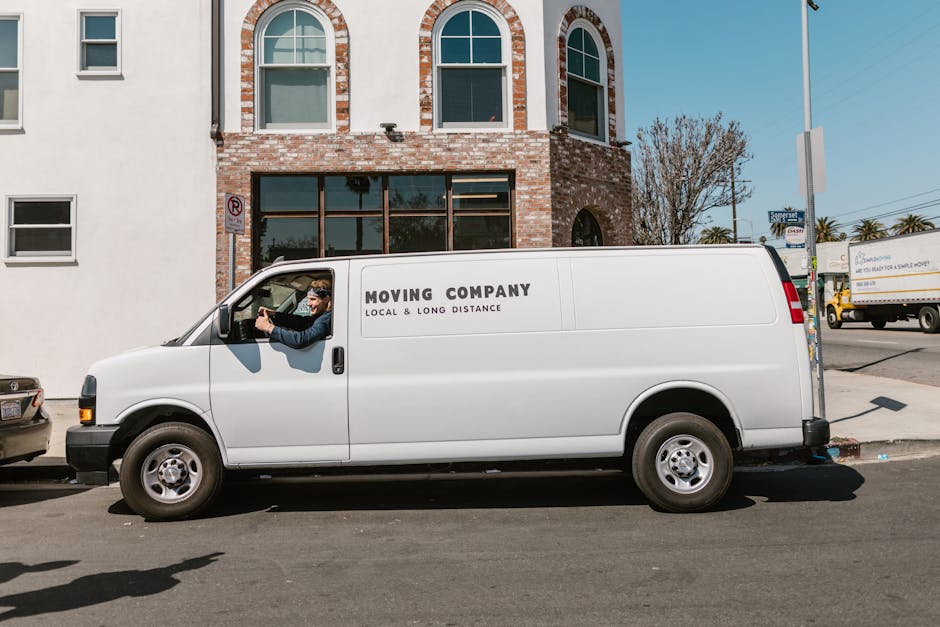
Do you need a street permit for a UK moving van? Council rules explained
If you are arranging a house move and your van needs to stop on a public road, the question comes up fast: do you need a street permit for a UK moving van? The short answer is that sometimes you do, sometimes you do not, and the rules depend on the council, the road, the size of the vehicle, and how long you need to park. That sounds a bit messy, because it is. But once you understand the basics, it becomes much easier to plan a move without last-minute drama, fines, or that awkward moment when the van is circling the street with nowhere legal to stop.
This guide breaks down council rules in plain English, explains when a permit is usually needed, and shows you how to avoid common mistakes. It is written for anyone moving home, booking a removals team, or trying to work out whether a loading bay, suspension, or parking bay permit might be needed before moving day.
Why Do you need a street permit for a UK moving van? Council rules Matters
Moving day is stressful enough without parking enforcement turning up at 7:30 in the morning. A street permit matters because a moving van can create three separate problems at once: it can block traffic, breach local parking restrictions, and make loading or unloading unsafe if the vehicle cannot stop close enough to the property.
In many parts of the UK, especially dense urban areas like London, councils actively manage loading, waiting, yellow lines, suspended bays, and controlled parking zones. If your van is parked where it should not be, the result can be a penalty charge notice, a clamped move schedule, or a team of exhausted movers carrying wardrobes farther than anyone planned. Not ideal.
The other reason this matters is practical. A permit is not always about avoiding a fine. Sometimes it is about reserving enough kerb space so your removal van can actually do the job. If you have ever tried to unload boxes in a narrow terraced street while neighbours are trying to get out, you will know how quickly the whole thing can become a small logistical circus.
Expert summary: if your moving van will stop on a public street, assume you may need permission until you have checked the local council rules. That one habit saves more moving-day stress than people expect.
There is also a trust angle here. A reputable removals provider will normally ask about parking, access, and restrictions early on. If they do not, that is a small red flag. Good planning is not fancy, it is just the difference between a calm move and a frantic one.
How Do you need a street permit for a UK moving van? Council rules Works
Street permit rules are usually set locally, not nationally. That means the exact answer changes from one council area to another. The broad idea is simple: if a van needs to park, wait, or load on a public road in a restricted area, the council may require a permit, a dispensation, a parking bay suspension, or some other form of approval.
Here is the basic way it tends to work in practice:
- You check the street conditions. Look for yellow lines, permit-holder bays, pay-and-display bays, resident zones, loading restrictions, red routes, or signs that limit stopping times.
- You identify what the van needs to do. Is it a quick drop-off, a longer load-out, or a full-day house move? The longer the van stays, the more likely a permit or suspension is needed.
- You contact the council or check the local parking guidance. Councils often have moving-related parking rules, but the process and wording can vary a lot.
- You arrange the correct permission. This might be a parking bay suspension, a temporary parking permit, a dispensation, or instructions on where the van may stop legally.
- You keep the permit details to hand. On the day, the driver may need to display it or follow exact instructions, such as bay numbers, times, or vehicle registration details.
That is the general flow, although to be fair, councils can use different names for similar things. One borough may call it a suspension, another may refer to a permit, and a third may bundle moving access into a wider parking application. Annoying? Slightly. Manageable? Yes.
Not every move requires a permit. For example, if you have a private driveway, a forecourt, or off-street loading space and the van can stay entirely on private land, you may not need council permission at all. But once the vehicle touches public highway space, the rules start to matter.
In central or inner-city locations, this is especially important. A small flat move in Central London can need more parking planning than a full house move in a quieter suburban street. The road layout alone can make the difference.
Key Benefits and Practical Advantages
Getting the parking side sorted in advance is not just about compliance. It makes the move run better in several very real ways.
- Less risk of fines or enforcement action. If the van is parked lawfully, you are not gambling with the whole schedule.
- Better access for loading and unloading. Shorter carrying distance means less time, less strain, and fewer broken boxes. Simple as that.
- Smoother coordination with neighbours and building management. When everyone knows where the van will go, there are fewer complaints and fewer awkward conversations on the pavement.
- Less delay on moving day. Nobody wants the removal team waiting while someone phones the council or hunts for a legal space three streets away.
- Safer handling of furniture and appliances. If the van can park close, heavy items can be moved with less twisting and fewer narrow-corridor manoeuvres.
There is another, quieter benefit: peace of mind. When people know the street side is under control, they relax a bit. The kettle gets switched on. The boxes start to vanish from the hallway. You can hear the difference in the house, honestly. Fewer tense voices, fewer slammed doors, less running around.
For people arranging a full service move, this also helps the removals team stay efficient. If you are comparing options and considering professional removal services, it is worth asking how they handle parking checks and access issues before the booking is finalised.
Who This Is For and When It Makes Sense
This topic matters for more people than you might think. It is not just for people moving into a permit-controlled street in London, though that is a common case.
You are likely to need to think about a street permit if you are:
- moving from a terraced or narrow residential street
- using a larger removals vehicle or lorry-sized van
- moving in a controlled parking zone
- unloading on a road with double yellow lines or timed restrictions
- booking a move into a block of flats with limited access
- arranging a business move where parking space is needed outside the premises
- using a man-and-van service and the van must stop on the street for more than a moment
This is especially common if you live in a busy urban area. In places such as London, and more specifically borough-heavy areas like Westminster or Camden, road space is tightly controlled and enforcement is usually more active than in quieter districts. That does not mean every street needs a permit, but it does mean you should not guess.
If you are moving a smaller load and the van can use a private driveway, a service like man and van may be enough without any separate street arrangement. But if the vehicle is likely to be on the kerb for a while, you should check first.
Truth be told, the question is often not "Can I get away with it?" but "What is the least painful legal way to do this properly?" That is the one worth asking.
Step-by-Step Guidance
Here is a practical process you can use before moving day. It works whether you are moving one street over or across town.
1. Identify the exact address and street conditions
Walk or check the street in daylight if possible. Look for signs, bay markings, resident permit zones, loading restrictions, and any suspension notices. A street can look fine at a glance and still be heavily controlled. Parking rules hide in plain sight sometimes.
2. Decide what kind of stopping is needed
Ask yourself: is this a short stop for boxes, or will the van be there for a large part of the day? That distinction matters because councils may treat loading differently from waiting or parking.
3. Check whether the road is public or private
If the van can stay entirely on private land, such as a driveway or private forecourt, council permission may not be needed. If any part of the work depends on the public road, you need to check the local rules.
4. Contact the council or review its parking guidance
Look for moving-home parking instructions, bay suspension rules, or temporary loading permissions. Councils often require advance notice. Leave room for admin delays, because council processes rarely move at moving-day speed.
5. Book the right support service
If you want a fully managed move, ask the removals company how they handle parking, access, and vehicle size. A good provider will tell you what information they need from you, and they will usually flag issues early. If you are still comparing options, a service page like removals van can help you think about vehicle type and access needs at the same time.
6. Confirm timing and display instructions
Some permissions apply only at specific times. Others may require the van to be positioned in a certain bay or zone. Keep the paperwork, reference number, or confirmation message handy. On moving day, you do not want to be digging through a box labelled "kitchen stuff" to find a parking reference. Been there, or close enough.
7. Build in a backup plan
Even a well-organised move can hit a snag. A neighbour may already be parked in the space. A delivery van may be in the way. A loading bay may be temporarily unavailable. Have a fallback plan for where the vehicle can legally wait for a few minutes without turning the whole move into a scramble.
Expert Tips for Better Results
After enough moving days, a few habits stand out as genuinely useful.
- Check the street at the exact time you will be moving. A road that feels quiet at 10 a.m. may be completely different at school run time or in the evening.
- Measure the van and the access point. A standard van might fit where a larger moving truck will not. Vehicle height can matter near trees, arches, and tight residential streets.
- Choose the least disruptive loading location. If there is a legal bay near the entrance, use it. If not, ask the council about the best lawful alternative.
- Tell neighbours early. A note through the door can save arguments, especially in apartment blocks or terraced streets where everyone shares the same tight space.
- Keep the path clear. A permit does not magically make a cluttered pavement safe. Keep boxes, prams, and bins out of the way where possible.
- Use a removal company that understands local access. If you are booking a wider move, a provider with experience in house removals will usually have seen all the classic parking headaches before.
One small but important thing: do not assume the same rules apply on both sides of a move. Your old address and new address can have completely different council requirements. That catches people out all the time.
And yes, it is boring admin. But boring admin is often what prevents the expensive bit later.
Common Mistakes to Avoid
Most parking problems during a move come from a handful of predictable mistakes. The good news is that they are easy to avoid once you know what to watch for.
- Leaving permit checks until the night before. Some councils need advance notice, and you may not get approval in time.
- Assuming a moving van gets special treatment. It usually does not. A van is still a vehicle on a public road, and the restrictions still apply.
- Thinking one permit covers both addresses. It often does not. Each street may need its own arrangement.
- Ignoring loading restrictions because the stop is "only for a minute". Enforcement officers do not care that the sofa was almost out. The rule is the rule.
- Booking the wrong vehicle size. A larger van can be harder to place legally and safely. That matters more than people think.
- Forgetting about other road users. If a van blocks sightlines or narrows the road too much, even a technically short stop can become a problem.
Another common one is not checking whether the road is under special traffic management, such as timed restrictions near schools, markets, or busy town-centre streets. That sort of detail can make a standard unloading plan fall apart very quickly.
There is a mild irony here: the thing people spend weeks packing, they sometimes spend five minutes checking the parking for. That is backwards, really.
Tools, Resources and Recommendations
You do not need a complicated toolkit, but a few simple resources help enormously.
- Your council parking information. This is the first place to check for moving-day rules, bay suspensions, or temporary permissions.
- Street-view style map checking. Useful for seeing whether the road looks narrow, one-way, or packed with controlled bays.
- Removal company pre-move questionnaire. Good firms will ask about parking, floor level, access, and loading distance.
- Building management or landlord contact. Especially useful for flats, estates, and gated developments where there may be separate access rules.
- Basic timing plan. A written schedule helps you see when the van will arrive, how long loading might take, and whether the parking arrangement matches the move window.
If you are still choosing a provider, it can help to review broader service information too. Pages such as removal company and pricing and quotes are useful when you want to compare service levels, not just price.
For home moves in particular, you might also look at home moves to see how a move is usually structured from the first enquiry through to moving day. That context helps if you are trying to decide whether you need a full-service solution or something lighter.
Law, Compliance, Standards, or Best Practice
There is no single national "street permit for a moving van" rule that applies in the same way everywhere across the UK. In practice, you are dealing with local parking controls, highway management rules, and council procedures. That is why the answer depends so much on your exact street and borough.
Best practice is straightforward:
- do not assume loading is automatically permitted
- do not park in a controlled bay without checking the rules
- do not obstruct access for emergency vehicles, pedestrians, or neighbours
- follow any time limits, display requirements, or location instructions exactly
- make sure the driver understands the approved stopping point before arriving
In residential moves, councils often expect people to plan ahead rather than react on the day. That is a fair expectation. Moving traffic is already disruptive. A proper parking arrangement shows respect for the street and reduces the chance of complaints.
If you are using a removals team, it is sensible to ask whether they have public liability and goods-in-transit cover, and whether their safety procedures include access checks. A company that takes this seriously is usually easier to work with. For a broader look at safety and operational standards, insurance and safety is worth a look.
That said, if you are unsure about the precise local requirement, be cautious rather than bold. Council wording can be a bit plain in one place and oddly specific in another. Better to verify than guess.
Options, Methods, or Comparison Table
Different moving situations call for different parking solutions. Here is a simple comparison to help you choose the most sensible route.
| Option | Best for | Typical benefit | Possible downside |
|---|---|---|---|
| Use private driveway or off-street space | Homes with clear private access | Least council involvement, easiest loading | Not always available, may still have tight access |
| Standard street parking | Low-restriction roads | Simple if legal spaces exist | No guarantee a space will be free on the day |
| Permit or dispensation | Controlled streets and longer stops | More certainty and better planning | Needs advance application and may have conditions |
| Bay suspension or reserved area | Busy urban streets, flats, and loading-heavy moves | Creates a dedicated stopping area | Usually needs notice and may involve a fee |
| Short curbside stop with careful timing | Very brief loading where allowed | Fast and low effort | Risky if the stop over-runs or the street is tightly regulated |
For many people, the best solution is not the cheapest one on paper. It is the one that keeps the van close, legal, and predictable. Predictable is underrated. Very underrated.
Case Study or Real-World Example
Here is a realistic example based on a common London move.
A couple moving from a second-floor flat in a busy residential street in Islington booked a mid-sized van for a Saturday morning. At first, they assumed the van could simply stop outside for an hour while the team loaded furniture and boxes. But the road had resident parking controls, a limited loading window, and very little spare kerb space.
They checked the council guidance a week before the move and found that the street needed a temporary parking arrangement. They also confirmed the vehicle size with the removals team and adjusted the booking so the van arrived slightly earlier, before the street filled with parked cars. On the day, the loading ran smoothly. No circling, no argument with neighbours, no pressure to drag a wardrobe half a block. The move still felt busy - because moves always do - but it was calm in the way that matters.
The important lesson here was not that they knew everything. They did not. They just checked early and asked the right questions. That is usually enough.
If you are facing a similar move, especially in a dense area like office removals or residential streets with mixed parking restrictions, the same principle applies: plan access first, then worry about the boxes.
Practical Checklist
Use this checklist the day before the move, or earlier if you can. It keeps things grounded when the rest of the day feels slightly chaotic.
- Check whether the van will stop on public or private land
- Review the street signs, bay markings, and parking restrictions
- Confirm whether the council requires a permit, dispensation, or suspension
- Check the move date, start time, and expected loading duration
- Confirm the van size and whether it can legally fit in the available space
- Ask the removals team how they want the parking arranged
- Tell neighbours or building management if needed
- Keep permit details or approval references easy to access
- Have a backup legal parking option ready
- Make sure access paths are clear for boxes and furniture
Quick rule of thumb: if you are unsure, treat the street as restricted until you prove otherwise. That one habit prevents a lot of hassle.
Conclusion
So, do you need a street permit for a UK moving van? Council rules say: sometimes yes, sometimes no, and the deciding factor is usually the local parking setup rather than the move itself. If the van is stopping on a public road in a controlled area, especially for more than a brief load, checking the council rules is not optional. It is part of planning the move properly.
The good news is that once you know what to look for, the process becomes far less intimidating. Check the street, understand the parking controls, book the right vehicle, and leave a little time for admin. That is usually enough to keep the day moving in the right direction.
If you want a smoother, less stressful move, think about access early rather than late. It sounds obvious, but in the rush of packing and labels and last-minute tape hunts, obvious things are the first to vanish.
Get a free quote today and see how much you can save.
One small step now can save a very long, very frustrating day later. And frankly, moving is hard enough already.
Frequently Asked Questions
Do you always need a permit for a moving van in the UK?
No. If the van is on private land or the street has no restrictions that affect your stop, a permit may not be needed. But if you are parking or loading on a controlled public road, you should check the local council rules first.
What is the difference between a parking permit and a bay suspension?
A parking permit usually allows certain parking activity for a vehicle or location, while a bay suspension temporarily removes normal use of a parking bay so it can be reserved for a specific purpose. Councils use different terms, so the exact meaning can vary.
How far in advance should I check council rules?
As early as possible. A week or two ahead is sensible, and more time is better if your street is busy or heavily regulated. Some applications can take time, especially in urban boroughs.
Can a removals company arrange the permit for me?
Sometimes, yes. Some removal companies help with parking advice or arrange parts of the process, but not all do. Always confirm this before booking, because the responsibility may stay with the customer.
What happens if I park a moving van where I should not?
You could receive a parking penalty, face delays, or be forced to move the vehicle before the loading is finished. In some streets, the van may also obstruct traffic or create safety issues.
Do I need a permit for a man and van service?
Possibly. The size of the vehicle does not remove parking restrictions. If the van needs to stop on a controlled street, you should still check whether a permit or special permission is needed.
Are council rules the same across the UK?
No. Parking and loading controls are set locally, so rules can differ by council and by street. That is why a move in one area may be straightforward while another needs a formal arrangement.
What if I am moving from a flat with no driveway?
That is one of the situations most likely to need planning. Flats often have tighter access, shared bays, or estate rules, so check both the council guidance and any building management requirements.
Do I need to display the permit on the windscreen?
Sometimes, but not always. Some councils issue virtual permits or reference numbers instead. Follow the exact instructions given when the permission is approved.
Is it worth paying for a permit if the street seems quiet?
Often, yes. Quiet streets can still be restricted. Paying for certainty may be cheaper than risking a fine or losing time on moving day. It is one of those boring costs that can save a lot of stress.
Can I use hazard lights instead of getting a permit?
No. Hazard lights do not override parking rules. They may make the van more visible, but they do not create legal permission to stop where it is otherwise restricted.
What should I ask my removals company about parking?
Ask what vehicle size they plan to use, whether they need a reserved space, whether they can advise on permits, and how they handle delays if a legal parking spot is unavailable. A good answer should be clear and practical.