Complaints Procedure for Removal Services
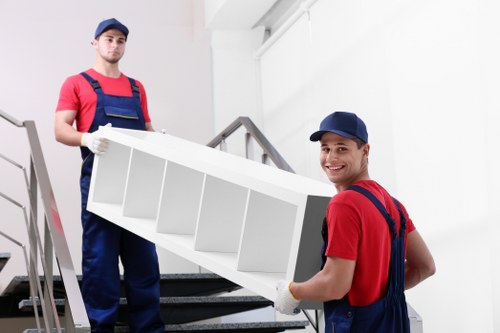 This Complaints Procedure sets out how customers and stakeholders can raise concerns about any aspect of a removal service, whether relating to a man and van removal team, a full house removal, or a specialist item transfer. The purpose of this policy is to ensure that complaints are handled consistently, fairly and transparently across our removal operations. By providing a clear pathway for reporting problems we aim to resolve issues promptly and to learn from every case to improve future removals.
All complaints relating to removals, whether about the moving crew, timetables, condition of items, or customer communication, fall within the scope of this procedure. Complaints may be submitted in writing or verbally and will be recorded in a secure complaints register. Confidentiality will be maintained for complainants who request anonymity to protect personal details and to encourage open reporting.
![Two removal staff members dressed in red overalls are inside a bright, empty room with light wooden flooring and white walls. They are carefully stacking and balancing a large cardboard box on top of several other boxes that are arranged vertically between them. The room features two double-glazed windows with light wooden frames, situated on adjacent walls, allowing natural light to fill the space. Additional cardboard boxes of various sizes are placed against the walls and on the floor, some unopened, while others are partially assembled, ready for packing or transport. The scene suggests a professional house removal process, likely within a residential property in or near a town in the UK. The environment appears clean and organized, with ample space for furniture and packing activities, and the staff are focused on safely stacking the boxes for efficient moving. The image aligns with the services offered by Removal Services, who specialise in residential relocations in the local area, including postcodes around [POSTCODE] and the nearby region of [TOWN].](/pub/_photos/removals/f2000535552.jpg) Every complaint received will be acknowledged at the earliest practical point. A brief acknowledgement will include the name of the person handling the case and an estimated timescale for the initial response. When a customer raises a concern about a removals contractor or removal company representative, the complaint will be logged and an initial assessment will determine whether it can be resolved quickly or requires a formal investigation.
Every complaint received will be acknowledged at the earliest practical point. A brief acknowledgement will include the name of the person handling the case and an estimated timescale for the initial response. When a customer raises a concern about a removals contractor or removal company representative, the complaint will be logged and an initial assessment will determine whether it can be resolved quickly or requires a formal investigation.
The formal investigation phase is designed to gather facts and determine appropriate remedies. Investigations will typically include a review of the booking record, interviews with the removal team, and inspection of any damaged goods or photographic evidence supplied by the complainant. Key stages of the investigation include:
- Verification of the booking and transport details
- Collection of witness statements from staff and third parties involved in the removal
- Assessment of liability based on service terms and observed evidence
![A young man with dark hair, wearing a blue striped shirt, is smiling and holding a medium-sized cardboard moving box sealed with tape, standing in a bright, modern apartment with large windows and wooden frames. Behind him, a woman with blonde hair, dressed in a red long-sleeve top and blue jeans, is also smiling and engaged in packing or unpacking with several other cardboard boxes of various sizes stacked or placed around her. The background shows a residential street outside the windows, with multiple apartment buildings visible. The scene depicts an interior space during a house removal or relocation, emphasizing the process of packing and preparing items for move. The flooring appears to be light-colored wood or laminate, and the room is well-lit with natural daylight, creating a professional and approachable atmosphere associated with removals services in the UK, possibly near the postcode associated with the [PAGE_TITLE] page.](/pub/_photos/removals/f2001356560.jpg) Decisions will be reached on the balance of probabilities and will consider both contractual terms and good industry practice. Where a complaint involves an allegation of negligence, damage, or loss during transit, the investigating officer will outline proposed remedies which may include repair, replacement, partial refund, or other remedial action tailored to the circumstances. Every outcome will be explained clearly in the investigation report.
Decisions will be reached on the balance of probabilities and will consider both contractual terms and good industry practice. Where a complaint involves an allegation of negligence, damage, or loss during transit, the investigating officer will outline proposed remedies which may include repair, replacement, partial refund, or other remedial action tailored to the circumstances. Every outcome will be explained clearly in the investigation report.
Where appropriate, remedies will be offered promptly and implemented without undue delay. Remedial actions may include arranging repairs by an approved specialist, coordinating collection for replacement items, or negotiating a financial settlement that reflects the assessed impact on the customer. All resolutions aim to be fair and proportionate to the nature of the complaint and the loss suffered.
![Three individuals are inside a well-lit residential interior, engaged in a house removals process. The young man in the foreground, wearing a white T-shirt and a watch, is smiling at the camera while holding a red envelope or document in one hand and resting his other hand on a cardboard box. Behind him, a woman with shoulder-length hair, dressed in a red top, stands to the left, smiling and holding a medium-sized brown cardboard box. To her right, a man with dark, curly hair and a beard, dressed in a beige shirt, is also smiling and holding a similar box. The scene contains multiple brown cardboard boxes of various sizes stacked on each other, some of which have packing labels or markings, and suggests an organized packing area. The background features plain white walls, possibly part of a house or flat, with additional boxes and packing supplies indicating an active moving or packing operation. The setting is professional and neutral, reflecting typical house removals activities in the UK, close to the postcode area related to [TOWN]. The overall atmosphere is positive and focused on relocation tasks, with tidy and carefully packed household items ready for transport.](/pub/_photos/removals/f1981680544.jpg) If a complainant is dissatisfied with the outcome, an escalation process is available. An internal review will be undertaken by a senior manager who was not involved in the original decision. That review will re-examine the evidence and the rationale for the remedy and will provide a final internal determination. This step is intended as a final internal safeguard before any external options are considered.
If a complainant is dissatisfied with the outcome, an escalation process is available. An internal review will be undertaken by a senior manager who was not involved in the original decision. That review will re-examine the evidence and the rationale for the remedy and will provide a final internal determination. This step is intended as a final internal safeguard before any external options are considered.
![An interior view of a minimally furnished room with light-colored wooden flooring and plain white walls. In the corner near a large, open window with a yellow frame, there is a white radiator mounted below the window sill. The window allows natural daylight to illuminate the space and offers a view of a blue sky with some clouds. In the left foreground, multiple stacked cardboard boxes of various sizes are arranged on a wooden pallet, suggesting recent packing or preparation for moving. Leaning against the wall beside the boxes, there are several long, flat cardboard sheets, possibly used for wrapping or protecting items. The scene is clean and organized, typical of a house being prepared for a removal or relocation process, with the image subtly referencing local domestic environments common in the [POSTCODE] area, near [TOWN], while featuring the professional handling by Removal Services in a typical residential setting.](/pub/_photos/removals/f1242018144.jpg) Timescales are important for transparency: acknowledgements will be sent within five working days, initial investigations concluded within 20 working days where practicable, and final responses or remedial actions implemented as agreed in the resolution. If exceptional circumstances require a longer investigation, the complainant will be kept updated about progress and any adjusted timescales.
Timescales are important for transparency: acknowledgements will be sent within five working days, initial investigations concluded within 20 working days where practicable, and final responses or remedial actions implemented as agreed in the resolution. If exceptional circumstances require a longer investigation, the complainant will be kept updated about progress and any adjusted timescales.
Record Keeping and Monitoring
Comprehensive records will be kept for each complaint, including the initial submission, investigation notes, correspondence, and outcomes. These records will be used to identify trends in removal operations, recurring risks with packing or transit, and training needs for removal teams. Regular reviews of complaint records support continuous improvement and help to reduce the incidence of future complaints.Impartiality and Fair Treatment
All complaints will be treated impartially. Staff involved in handling complaints are trained to maintain objectivity and to avoid conflicts of interest. Where a member of staff is implicated in a complaint, the investigator will take steps to ensure that the review remains fair, and disciplinary considerations will be handled separately from the customer resolution process.Complainants are encouraged to provide supporting evidence such as photographs, precise descriptions of the items affected, and dates and times of events to assist a timely and accurate investigation. Clear communication from both the service user and the removal team reduces misunderstandings and expedites resolution. The removal operations will use lessons learned from each complaint to update procedures, training and quality control measures.
This Complaints Procedure for removal services is designed to be accessible and straightforward while safeguarding the rights of both customers and operational staff. It seeks to resolve disputes constructively, to restore service standards quickly, and to implement corrective actions where necessary. The ultimate aim of the policy is to maintain trust in the removal process and to ensure that any concerns are resolved with integrity and efficiency.
Notes on terminology: references to removal service, removal company, or removals team are used interchangeably to cover a range of moving and transport activities. The principles set out here apply to short-term moves, large-scale relocations, and specialist removals alike.
Review cycles for this procedure will be scheduled to reflect operational changes and learning from complaint outcomes. Regular review ensures that the complaints handling remains effective, proportionate and aligned with best practice across the moving and removal industry.